
More glass. More view.
Large panels can maximise glazed area and reduce visual interruption.
Why sliding doors
Sliding doors can turn a wall into an opening: expansive glazing, no swing arc and a panel that can remain open wherever life needs it.
The strongest result comes from designing glass, frame, track, drainage, seals and hardware as one system. A beautiful panel is only successful if people can keep using it comfortably.
The architectural advantage
A sliding door earns its place both when closed and when it disappears to the side.
Large panels can maximise glazed area and reduce visual interruption.
Movement within the plane preserves floor area and circulation.
A high glass-to-frame ratio can support whole-door performance when the complete system is well designed.
Thresholds, interlocks, seals and drainage can deliver excellent weathering when suited to exposure.
Leave the panel where needed without a swing leaf or conventional hold-open.
Pocket systems can clear the opening when structure, waterproofing and access are coordinated early.
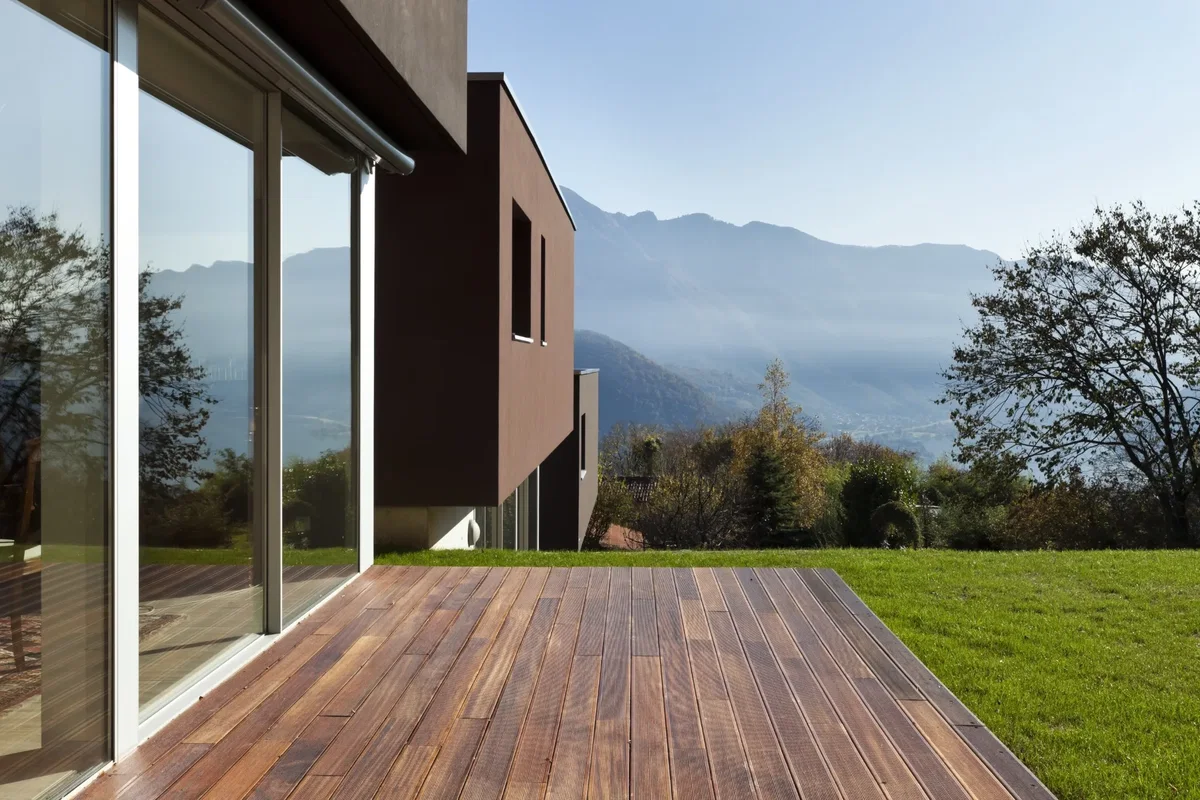 The architectural possibility of sliding doors
Choosing honestly
There is no universally superior door. Choose around how the opening works every day—not only the photograph taken when fully open.
Strong for large glazing, partial opening and no swing intrusion. Conventional panels overlap unless a pocket is created.
Can open most of the width, but adds panel joints, hinges and a stacked bundle.
Familiar and economical for modest openings, but the swing arc consumes space and effort rises with leaf size.
The questions people feel
The hardware is largely invisible. Operating force, noise and longevity are not.
Ask about breakaway and running force for the complete door—not merely panel weight or roller rating.
Noise belongs to the wheel-and-track system. Material contact, guidance, track finish and debris all influence it.
Life should be considered in cycles and conditions. Residential, coastal, school and hospitality duty differs.
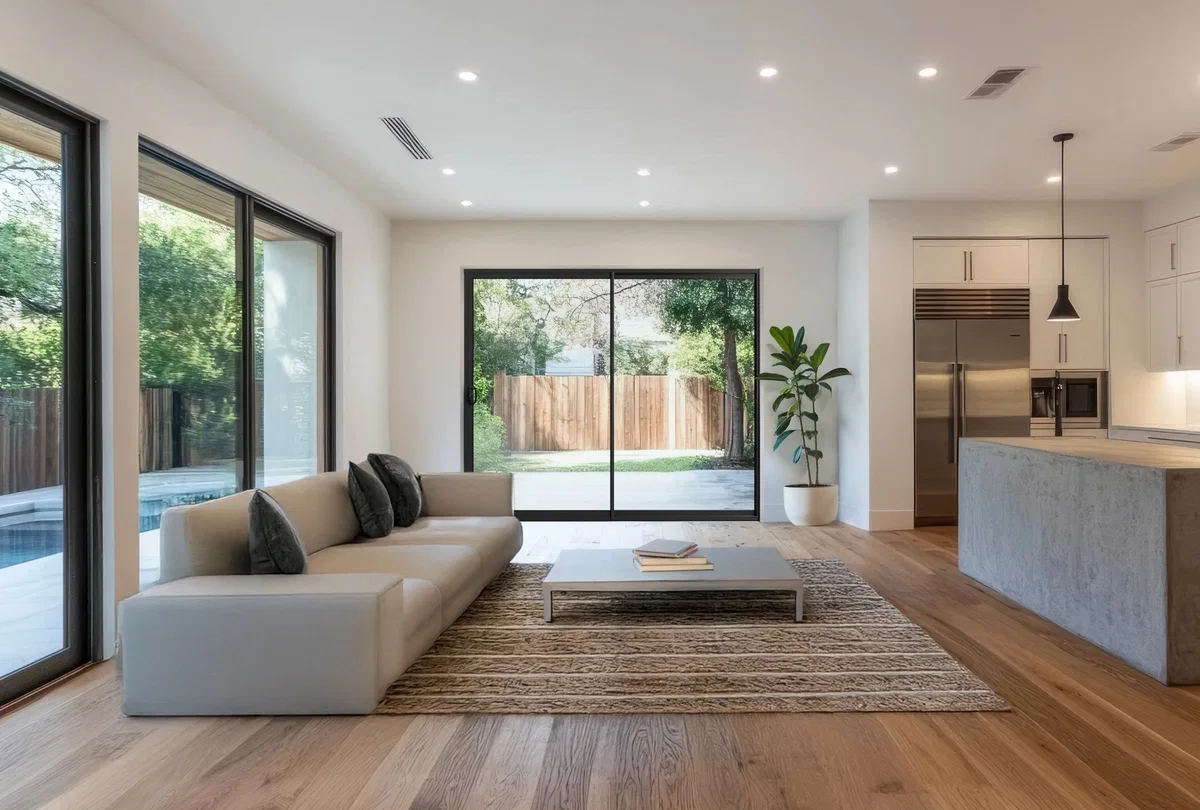
The hidden compromise
Larger panels, thicker glazing, stronger frames and more effective seals can improve architecture while increasing the effort at the handle.
Start with sound mechanical rolling and a well-resolved complete door. When it still asks too much of the person, VOLTA carries the remaining load without taking away control.
Sliding-door questions
A sliding panel stays within the plane of the opening, so it needs no swing arc. It can preserve floor area, support large glazing and remain open at a chosen position.
They can be. Large panel formats and restrained framing reduce visual interruption, subject to the chosen system, glass and structural requirements.
Yes. Frame design, thermal breaks, glazing, interlocks, seals, threshold drainage and installation determine whole-door performance.
Panel mass is only part of the answer. Seals, guides, roller design, track condition, alignment, contamination and installation also matter.
It can be designed around compatible thresholds and a documented force target. VOLTA can reduce effort in approved configurations; accessibility is assessed on the complete door.
Design the opening
Bring us the preferred system, opening size and design intent. We will help identify whether VOLTA is the right assistance pathway.
Discuss an opening